
Marietta Work Injury Lawyer
Work Injury Lawyer Marietta, GA

If you have been injured at work, you may be entitled to workers’ compensation benefits which means you need a work injury lawyer Marietta, GA residents trust. While this may be the case, it can be complicated to understand your legal rights and what paperwork needs to be filed in order to collect on them. If you were hurt on the job and are dealing with a worker’s compensation insurance company, consider speaking with an experienced lawyer at Johnson & Alday, LLC to help you sort out your options and ensure that you get all of the benefits you deserve for your injuries.
Table of Contents
- Legitimate Claims
- Common Misconceptions About Work Injuries
- Work Injury Infographic
- What To Bring To Your Work Injury Lawyer
- Work Injury FAQs
Work Injury Examples
There are many types of injuries that can happen on the job. For example, you could slip and fall, suffer a repetitive motion injury, or be exposed to harmful chemicals. If you’ve been injured at work, you may be wondering if you need a work injury lawyer. Generally speaking, most employers carry workers’ compensation insurance in order to cover any medical expenses incurred as a result of an injury sustained on the job. However, there are many situations where this is not enough. Injuries caused by employer negligence typically don’t get covered under workers’ compensation insurance (this includes intentional acts). So if your employer was negligent in their duty and it led to your injury, then you’ll need an attorney who specializes in this type of situation. Your employer is liable for your medical bills even if they don’t have workers’ compensation insurance!
Legitimate Claims
If you’ve been injured at work, you may be wondering if you have a legitimate claim. Here are a few things to consider:
- Did your injury happen while you were performing your job duties?
- Were you following all safety protocols?
- Is your employer at fault in any way?
- Do you have witnesses to corroborate your story?
- Do you have medical documentation of your injuries?
If you answered yes to any of these questions, then you may have a legitimate claim and should contact a Marietta work injury lawyer.
Benefits from Injuries
There are many benefits that you can receive from a work injury case. You may be able to get medical benefits, income benefits, and death benefits. You may also be able to get pain and suffering damages, and punitive damages. A lawyer can help you get the benefits that you deserve. It is important to speak with an attorney as soon as possible so they can start taking steps in getting you compensated for your injuries.
What an Attorney Can Do for You
If you have been injured at work, you may be wondering if you need a lawyer. The answer is maybe. If your employer offers workers’ compensation insurance, then you may not need a lawyer. However, if your employer does not offer workers’ compensation insurance or if you are not sure whether or not your employer offers it, then you may want to consider hiring a lawyer. A lawyer can help you determine if you should file a claim with the Department of Labor and learn about what benefits and protections you can receive as an employee.
Common Misconceptions About Work Injuries
If you were recently hurt at work, you may want to speak with a work injury lawyer Marietta, GA residents trust. You may be entitled to compensation. However, you may have heard several untruths about work injuries that are making you reluctant to file a worker’s compensation claim.
Here are the most common misconceptions about work injuries that you shouldn’t believe.
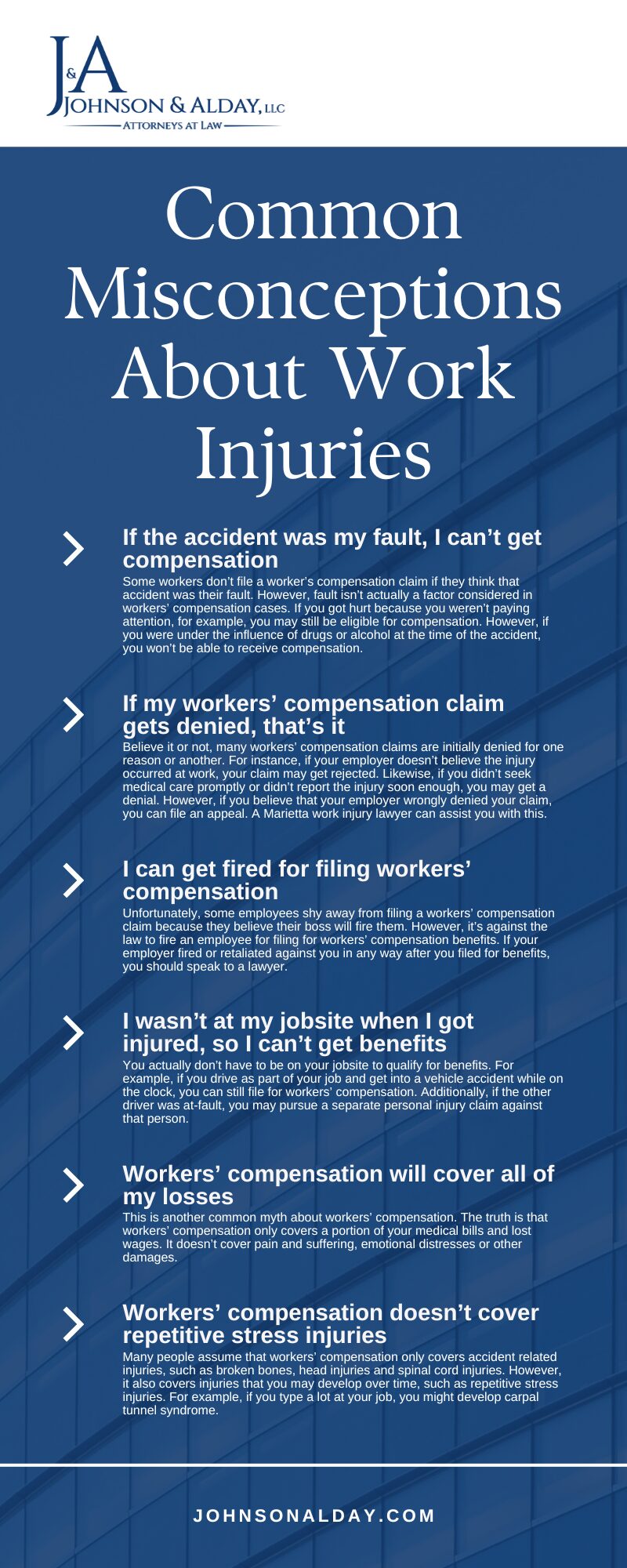
- If the accident was my fault, I can’t get compensation. Some workers don’t file a worker’s compensation claim if they think that accident was their fault. However, fault isn’t actually a factor considered in workers’ compensation cases. If you got hurt because you weren’t paying attention, for example, you may still be eligible for compensation. However, if you were under the influence of drugs or alcohol at the time of the accident, you won’t be able to receive compensation.
- If my workers’ compensation claim gets denied, that’s it. Believe it or not, many workers’ compensation claims are initially denied for one reason or another. For instance, if your employer doesn’t believe the injury occurred at work, your claim may get rejected. Likewise, if you didn’t seek medical care promptly or didn’t report the injury soon enough, you may get a denial. However, if you believe that your employer wrongly denied your claim, you can file an appeal. A Marietta work injury lawyer can assist you with this.
- I can get fired for filing workers’ compensation. Unfortunately, some employees shy away from filing a workers’ compensation claim because they believe their boss will fire them. However, it’s against the law to fire an employee for filing for workers’ compensation benefits. If your employer fired or retaliated against you in any way after you filed for benefits, you should speak to a lawyer.
- I wasn’t at my jobsite when I got injured, so I can’t get benefits. You actually don’t have to be on your jobsite to qualify for benefits. For example, if you drive as part of your job and get into a vehicle accident while on the clock, you can still file for workers’ compensation. Additionally, if the other driver was at-fault, you may pursue a separate personal injury claim against that person.
- Workers’ compensation will cover all of my losses. This is another common myth about workers’ compensation. The truth is that workers’ compensation only covers a portion of your medical bills and lost wages. It doesn’t cover pain and suffering, emotional distresses or other damages.
- Workers’ compensation doesn’t cover repetitive stress injuries. Many people assume that workers’ compensation only covers accident related injuries, such as broken bones, head injuries and spinal cord injuries. However, it also covers injuries that you may develop over time, such as repetitive stress injuries. For example, if you type a lot at your job, you might develop carpal tunnel syndrome. Although these injuries may be tougher to prove than accident related injuries, an experienced Marietta work injury lawyer can still help you get the compensation you deserve.
Contact a Marietta work injury lawyer today at Johnson & Alday, LLC for help with your case.
Work Injury Infographic
What To Bring To Your Work Injury Lawyer
Getting hurt on the job is just the tip of the iceberg, but your Marietta, GA work injury lawyer can help. At Johnson & Alday, LLC, we understand the importance of this preparation and offer the following tips to ensure you are well-prepared for our initial consultation.
1. Document The Incident
Compile a detailed account of the accident. Include the date, time, and location of the injury, how it occurred, and any conditions that contributed to the event. This should also include a list of any equipment or tools involved, and the names and positions of any witnesses. Your notes will help your Marietta work injury lawyer understand the context and specifics of the incident.
2. Gather Medical Records
Bring all medical documentation related to the injury. This includes hospital admission papers, doctor’s notes, treatment records, and prescriptions. These documents are critical as they provide proof of your injuries and form the basis of assessing your claim.
3. Collect Evidence Of Financial Impact
Provide documentation of any financial losses incurred due to the injury. This includes lost wages, medical bills, travel expenses for medical appointments, and any other out-of-pocket expenses. Detailed financial records strengthen your claim by illustrating the economic impact of the injury.
4. Record Communication With Your Employer
Keep records of all communications with your employer regarding the injury, including emails, texts, written notes, and summaries of verbal discussions. This information can play a vital role in demonstrating how your employer responded to the incident.
5. List Past And Scheduled Medical Appointments
Make a list of all medical providers you have seen for your injury and any future appointments. This includes general practitioners, specialists, physical therapists, and mental health therapists. Knowing the scope of your medical treatment helps us better understand the severity and potential long-term impacts of your injury.
6. Bring Employment Information
Include any relevant employment documentation such as your employment contract, pay stubs, a description of your job duties, and any correspondence related to your employment status post-injury. This information will help in assessing any employment law issues that might be pertinent to your case.
7. Organize A Timeline Of Events
If possible, create a timeline of events before and after the injury. This should include key dates such as your hiring, any previous accidents, and the steps you have taken since the injury occurred. A timeline can help clarify the sequence of events and is especially helpful in complex cases.
8. Note Any Changes In Your Daily Life
Document any changes in your lifestyle or activities due to your injury. This might include inability to perform specific tasks, required assistance for personal care, or modifications to your home environment. This type of information is useful in quantifying damages related to pain, suffering, and loss of enjoyment of life.
Contact Us Today
At Johnson & Alday, LLC, we have over 40 years of experience helping our clients get compensation for their work-related injuries and accidents. Contact us today, and see what a Marietta work injury attorney from our office can do for you.
Work Injury FAQs
Navigating the complexities of workplace injury law can be daunting. Whether you’re an employee who has suffered an injury on the job or an employer seeking to understand your legal obligations, it’s crucial to know your rights and responsibilities. Below, we’ve compiled a list of frequently asked questions about workplace injuries and the role of a Marietta, GA work injury lawyer. Our aim is to provide clarity and guidance to those facing these challenging situations. Johnson & Alday, LLC can help. Reach out to us today to learn more about what we can do for you.
What Is A Workplace Injury?
A workplace injury is any physical or psychological harm that occurs in the course of employment. This can include anything from a slip and fall in the office to chronic injuries caused by repetitive strain, or even mental health issues resulting from workplace stress.
Who Is Responsible For A Workplace Injury?
In most cases, employers are responsible for ensuring the safety of their employees. This includes maintaining a safe working environment and providing adequate training and equipment. If an employer fails to meet these obligations and an employee is injured as a result, the employer may be held liable.
What Should I Do If I’m Injured At Work?
If you suffer an injury at work, it’s important to contact a Marietta work injury attorney right away to get the proper care for seeking compensation. Take the following steps:
1. Report The Injury: Notify your supervisor or employer as soon as possible. This ensures there is a record of the incident.
2. Seek Medical Attention: Get medical help immediately. This not only addresses your health concerns but also provides documentation of your injury.
3. Document Everything: Keep detailed records of your injury, medical treatments, and any communications with your employer.
Can I Sue My Employer For A Workplace Injury?
In many jurisdictions, employees are covered by workers’ compensation, which is a no-fault system that provides benefits to injured workers. This means that in most cases, you cannot sue your employer directly for a workplace injury. However, there are exceptions. For instance, if your employer was grossly negligent or intentionally caused your injury, you might have grounds for a lawsuit.
What Benefits Can I Receive Through Workers’ Compensation?
Workers’ compensation typically covers medical expenses, rehabilitation costs, and a portion of lost wages. In the event of a permanent disability, you may also be entitled to long-term benefits. The exact benefits vary depending on the severity of the injury and the laws in your jurisdiction.
How Can A Work Injury Lawyer Help Me?
A work injury lawyer specializes in representing employees who have been injured on the job. They can assist you in several ways, such as:
1. Filing Claims: Ensuring that your workers’ compensation claim is filed correctly and on time.
2. Appealing Denied Claims: If your claim is denied, a lawyer can help you appeal the decision.
3. Negotiating Settlements: A lawyer can negotiate with insurance companies to ensure you receive fair compensation.
4. Pursuing Legal Action: If applicable, they can file a lawsuit against your employer or other responsible parties.
What If My Employer Retaliates Against Me For Filing A Claim?
Retaliation for filing a workers’ compensation claim is illegal. If your employer demotes, terminates, or otherwise discriminates against you for seeking compensation, a work injury lawyer can help you take legal action against them.
What Types Of Injuries Are Common In The Workplace?
Workplace injuries can vary widely depending on the industry. Some common examples include:
– Construction Injuries: Falls from heights, equipment accidents, and heavy lifting injuries.
– Office Injuries: Repetitive strain injuries, slip and fall accidents, and ergonomic issues.
– Industrial Injuries: Exposure to hazardous substances, machinery accidents, and noise-induced hearing loss.
How Long Do I Have To File A Claim?
The time frame for filing a workers’ compensation claim varies by jurisdiction, but it is typically between one and three years from the date of the injury. It’s crucial to act quickly, as missing the deadline can result in losing your right to benefits.
How Do I Choose The Right Work Injury Lawyer?
Selecting the right Marietta work injury attorney is essential for a successful outcome. Consider the following factors:
– Experience: Look for a lawyer who specializes in workplace injuries and has a proven track record.
– Reputation: Check reviews and ask for references from past clients.
– Communication: Choose a lawyer who communicates clearly and regularly updates you on your case.
– Fees: Understand the lawyer’s fee structure. Many work injury lawyers work on a contingency basis, meaning they only get paid if you win your case.
Contact Us For A Free Consultation
If you or a loved one has been injured at work, it’s crucial to understand your rights and options. Contact our experienced team of Marietta work injury lawyers today for a free consultation. We are here to provide the support and guidance you need to navigate this challenging time. Let us help you secure the compensation you deserve and get back on the path to recovery.