
Recovering From Your Personal Injury Accident
If you have been in an accident, it may be in your best interest to discuss your situation with a personal injury lawyer Marietta, GA injury victims and their families can rely on. Our team at Johnson & Alday, LLC has a proven record of success in helping those who have been injured to recover the compensation they need and deserve. With nearly 40 years combined experience in personal injury and workers compensation law, our team is well prepared to advocate for you throughout every step of the process.

Table Of Contents
- Personal Injury Practice Areas
- Types Of Compensation Available In Personal Injury Cases
- The Steps To Take Following A Personal Injury
- Marietta Personal Injury Law Infographic
- Marietta Personal Injury Law Statistics
- Marietta Personal Injury Frequently Asked Questions
- Marietta Personal Injury Lawyer Google Review
- Contact Johnson & Alday, LLC Marietta Personal Injury Lawyer
Personal Injury Practice Areas
Car Accidents
Car accidents can be devastating events that can result in serious injury and damage to your personal property. Our team has the knowledge and experience to advocate for you in court so you can obtain the compensation you need to get back on track. We know how to stand up to insurance companies when they try to get you to settle for an amount that is far lower than what you need and deserve after your accident. Our lawyers will let them know that you are not willing to settle for less than what you deserve.
Slip and Fall
Our Marietta personal injury lawyer has ample experience investigating and litigating slip and fall related personal injury cases. Every public business is responsible for maintaining a safe and clean environment for visitors. If your injury was caused by unsafe conditions in a public place, you may be entitled to significant compensation for your injuries. Let us navigate the intricacies of the legal processes related to slip and fall injuries so you can get back on your feet.
Dog Bite
Dog bites can be particularly traumatic events that lead to significant injuries. Immediately following being bitten, call 911 and seek medical treatment for your injuries. The officer that responds to your call should work with animal control to identify if the dog has a history of aggression. Be sure to thoroughly document the incident through pictures of your injuries. Also make notes about the details of what happened. By taking these steps after the bite you can protect your rights and improve the chances of success in your case.
Wrongful Death
Claims related to wrongful death can be particularly complex, often involving multiple types of claims simultaneously. It is essential to have a skilled legal team to advocate for you who can manage multiple claims simultaneously, without missing anything. Insurance companies tend to fight wrongful death claims rather aggressively, working hard to devalue the life of the deceased person. Our team can help recover compensation for medical bills, funeral expenses, pain & suffering, and lost wages.
Pedestrian Accident
The inherent risks of traveling as a pedestrian are high and the consequences of being hit by a vehicle can be devastating. If you feel that you took every measure to be safe and were still injured as a pedestrian, consider contacting a personal injury lawyer from our firm. We will fight to get compensation you need to get back on track after being injured.
Types of Compensation Available in Personal Injury Cases
A personal injury lawyer Marietta, GA clients trusts will work diligently to negotiate a settlement that is in the victim’s best interest with the at-fault party’s insurance company in order to avoid expensive and lengthy litigation that comes with a personal injury trial. While the majority of cases do settle, there are some that still end up in front of a jury, who will decide if and how much in damages the victim deserves.
Damage Phase
The damage phase is a key portion of a trial. This phase occurs after it is determined whether the defendant should be held responsible for the plaintiff’s harm. In the damage phase, the attorneys focus on quantifying the plaintiff's harm so that the jury can decide how much compensation the plaintiff deserves. In many ways, this portion of the trial is the most important, as it may lead to payment for the plaintiff to cover the costs of medical bills, lost wages, and other harm suffered.
Special Compensatory Damages
A Marietta personal injury lawyer knows that the easiest type of damages to quantify are special compensatory damages. These are damages that relate to financial harms that the plaintiff has suffered because of the defendant’s carelessness. For instance, if the defendant struck the plaintiff with his car and broke the defendant's leg, then the defendant would be able to receive compensation for the medical bills related to the broken leg and any complications that arose from it.
Similarly, if the plaintiff was in a car at the time, the defendant, or more likely the defendant's insurance company, would also have to cover the cost of repairing the car. However, these damages go beyond obvious economic harm. If the plaintiff missed work because of the accident, then the defendant must also cover the victim's lost earnings. If the victim's earning potential is permanently altered because of the injury, then compensatory damages may also cover future earnings.
Other Damages
Plaintiffs may also have access to other damages beyond special compensatory damages. There are general compensatory damages. Like special compensatory damages, these damages cover harms done to the plaintiff. They differ in that they are non-financial harms. These are often referred to as pain and suffering damages or emotional damages. These damages are much more difficult to put a particular value on, but they nevertheless redress an actual harm that was done to the plaintiff.
Punitive Damages
The final damage type includes punitive damages. A Marietta personal injury lawyer can explain how these damages relate more to the defendant's actions than to the plaintiff's harm. The idea is that these damages punish the defendant for particularly reprehensible conduct if the defendant's conduct was “willful and wanton.” In addition to punishing the defendant for particularly bad behavior, the existence of these damages also serves as an extra measure of deterrence. If other, future parties know that their misconduct will be punished even more harshly, they will be less likely to engage in that sort of behavior.
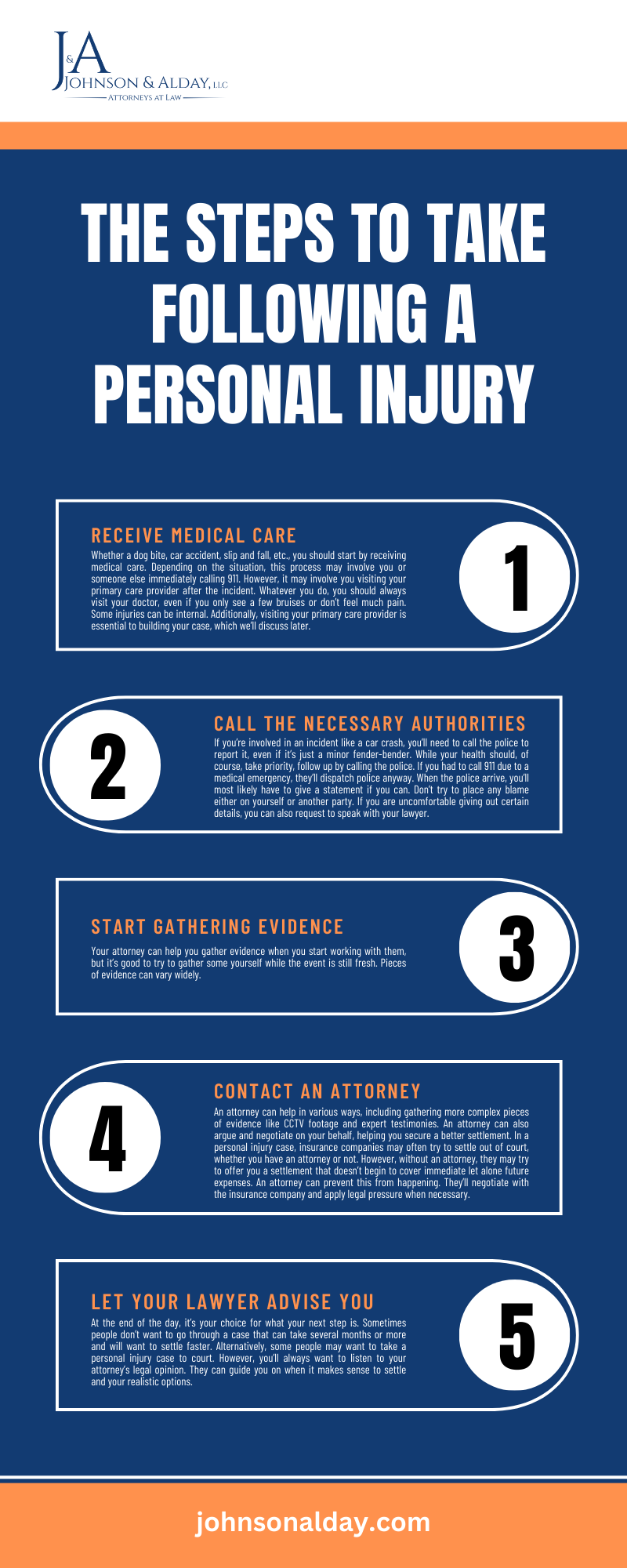
The Steps To Take Following a Personal Injury
Following a personal injury is bound to shock you and your loved ones, especially if it’s a serious injury. While there’s no way to prepare for a personal injury completely, you can take some steps to make the process easier.
Receive Medical Care
Whether a dog bite, car accident, slip and fall, etc., you should start by receiving medical care. Depending on the situation, this process may involve you or someone else immediately calling 911. However, it may involve you visiting your primary care provider after the incident. Whatever you do, you should always visit your doctor, even if you only see a few bruises or don’t feel much pain. Some injuries can be internal. Additionally, visiting your primary care provider is essential to building your case, which we’ll discuss later.
Call the Necessary Authorities
If you’re involved in an incident like a car crash, you’ll need to call the police to report it, even if it’s just a minor fender-bender. While your health should, of course, take priority, follow up by calling the police. If you had to call 911 due to a medical emergency, they’ll dispatch police anyway. When the police arrive, you’ll most likely have to give a statement if you can. Don’t try to place any blame either on yourself or another party. If you are uncomfortable giving out certain details, you can also request to speak with your lawyer.
Start Gathering Evidence
Your attorney can help you gather evidence when you start working with them, but it’s good to try to gather some yourself while the event is still fresh. Pieces of evidence can vary widely, including:
- Statements from yourself and other witnesses.
- Medical and police reports.
- Photographs taken, such as any damages sustained to yourself or any property.
- Expert testimonies. For example, a traffic collision re-constructionist can provide expert testimony regarding an incident following a car crash. Specialized physicians can also provide expert testimonies.
- CCTV footage.
Contact an Attorney
An attorney can help in various ways, including gathering more complex pieces of evidence like CCTV footage and expert testimonies. An attorney can also argue and negotiate on your behalf, helping you secure a better settlement. In a personal injury case, insurance companies may often try to settle out of court, whether you have an attorney or not. However, without an attorney, they may try to offer you a settlement that doesn’t begin to cover immediate let alone future expenses. An attorney can prevent this from happening. They’ll negotiate with the insurance company and apply legal pressure when necessary.
Let Your Lawyer Advise You
At the end of the day, it’s your choice for what your next step is. Sometimes people don’t want to go through a case that can take several months or more and will want to settle faster. Alternatively, some people may want to take a personal injury case to court. However, you’ll always want to listen to your attorney’s legal opinion. They can guide you on when it makes sense to settle and your realistic options.
Marietta Personal Injury Law Infographic
Understanding Relevant Personal Injury Law
A personal injury claim arises when an individual sustains injuries due to the negligent or intentional actions of another party. This area of law is designed to provide recourse to victims who have suffered harm, whether physical, emotional, or financial, as a result of someone else's wrongdoing.
Statute Of Limitations
In Georgia, there is a statute of limitations that governs the time frame within which a personal injury lawsuit must be filed. Generally, victims have two years from the date of the injury to initiate legal action. Failing to meet this deadline can result in the loss of the right to seek compensation. This emphasizes the importance of consulting a Marietta personal injury lawyer promptly after an injury occurs.
Comparative Negligence
Georgia follows a modified comparative negligence rule when it comes to personal injury cases. This means that if you are partially responsible for the accident that caused your injuries, your compensation may be reduced proportionally. For instance, if you were found to be 20% at fault, your compensation would be reduced by 20%. However, if you are found to be 50% or more at fault, you may not be eligible for any compensation.
Types Of Damages
Personal injury victims in Georgia may be entitled to various types of damages, including:
- Medical Expenses: This covers all reasonable and necessary medical costs resulting from the injury, including hospital bills, doctor's visits, medication, and rehabilitation.
- Lost Wages: If your injury prevents you from working, you may be compensated for the income you have lost as a result.
- Pain and Suffering: This includes compensation for physical and emotional distress caused by the injury.
- Property Damage: If your property was damaged in the incident, you may be entitled to reimbursement for repairs or replacement.
Negligence And Liability
To establish a successful personal injury claim, it is crucial to prove that the defendant (the party responsible) was negligent and that this negligence directly led to your injuries. This often requires gathering evidence, witness testimonies, and expert opinions to build a strong case.
Marietta Personal Injury Law Statistics
According to the U.S. Centers for Disease Control (CDC), approximately 31 million Americans require medical treatment due to general injuries each year. More than 173,000 deaths result from unintentional injury. These accidents happen practically everywhere: on the road, in the workplace, in retail stores, and in any other location where people are going about their normal routines.
Marietta Personal Injury FAQs
What are signs of medical malpractice?
When it comes to medical malpractice cases, as a Marietta, GA personal injury lawyer from Johnson & Alday, LLC has seen, it is more than just receiving unwanted medical news or diagnosis. A doctor must actually commit a mistake or oversight that causes their patient to suffer further injury, develop a new condition, or cause them to lose their lives. There are many ways that a doctor may commit medical malpractice, and can be related to prescribing the incorrect medication dosage or type, misuse of tools during birthing/delivery, incorrect or delayed diagnosis, inappropriate treatment plan, misuse of anesthesia, and much more.
How do I show that a driver is at-fault for an accident?
People get into car accidents every day, and if you were one of these people recently, then you may be wondering how you can successfully show that the other driver was at fault for the accident. The most influential thing you can do is gather as much evidence as possible that shows that your side of the story is accurate, and the other driver had been reckless or negligent in the moments before the collision occurred. If you are struggling to get evidence that supports your side of the story, then consider reaching out to a member of our legal team so we can investigate for you further. We may be able to uncover evidence that leans a verdict in your favor.
Are there ways I could be hindering my case?
Social media use is at an all-time high, as people use this platform to share their most inner thoughts and feelings, and the many things that they may go through. While social media can be connective when used for good, it could also hinder someone's case if they were in an accident but then use social media in a way that contradicts their claims. For example, if you recently filed a claim with your insurance company that you sustained broken bones and have to stay home from work to rest, but then post that you are out running errands, it may cause your claim to get reduced or denied. As a Marietta personal injury lawyer warns, do not underestimate the accessibility of social media even if your profile is private.
Can I rely on advice from friends and family?
Going through a personal injury accident can be stressful, and it's no surprise that friends and family are going to want to come to your aid to offer advice during this time. But they may be unintentionally giving you advice that is not appropriate for your situation. Even if someone else has gone through something similar that you have, it doesn't mean that the injuries, losses, damages, and influencing factors are going to be exactly the same. For this reason, we suggest consulting with us for advice on your specific situation.
When is the right time to seek help from a lawyer?
Many people don't even realize that getting help from a lawyer after a personal injury accident is a wise choice. After all, we're not properly told about the ways that a lawyer can help in the aftermath of a serious accident where another person was at fault. All too often people get blamed or taken advantage of when they're actually the ones that suffered the most. Ideally, you'll have a legal team that you can turn to before anything serious unfolds. But if you are going through something right now, we urge you to reach out to a Marietta personal injury lawyer at Johnson & Alday, LLC for assistance.
Johnson & Alday, LLC Marietta Personal Injury Lawyer
219 Roswell Street NE, Marietta, GA 30060
Marietta Personal Injury Lawyer Google Review
"Johnson & Alday is an extremely supportive and compassionate law firm. I am very thankful to have had them on my side. I had a prolonged case, however John Alday was very helpful throughout the whole process; always keeping me updated and looking out for my best interest. He was able to find the best outcome to which all parties could compromise. I am very glad my case had fallen into his hands." - Alexis V.
Contact Our Marietta Personal Injury Lawyers today!
When it comes to personal injury cases, our Marietta, GA personal injury lawyer stresses the importance of understanding the laws that govern them. At Johnson & Alday, LLC, we specialize in helping clients navigate the intricate web of Georgia's personal injury laws. With a focus on these laws, we strive to provide expert legal representation and ensure that our clients receive the compensation they deserve. Here, we'll delve into some key aspects of personal injury laws in Georgia.
Navigating the intricate landscape of personal injury laws in Georgia can be overwhelming, especially when you're dealing with the physical and emotional aftermath of an accident. To protect your rights and maximize your chances of obtaining fair compensation, seeking legal representation from an experienced personal injury attorney is crucial.
Contact Johnson & Alday, LLC today to discuss your personal injury case and explore your legal options. Our compassionate and experienced attorneys are ready to fight for your rights and help you recover from your injuries with the compensation you deserve.