
Marietta Brain Injury Lawyer
Brain Injury Lawyer Marietta, GA

The brain is one of the most sensitive and delicate parts of the human body, and it’s not difficult to see why — your brain controls all of your body’s functions and makes all of your body’s decisions, so when something goes wrong with it, it can have devastating effects on your life which is why you should contact a brain injury lawyer Marietta, GA. A lawyer may help those who have been affected by this type of injury get the compensation they deserve; contact an attorney today at Johnson & Alday, LLC.
Table of Contents
- Common Myths About Brain Injuries
- Brain Injury Infographic
- Overcoming Challenges In Brain Injury Litigation
- Marietta Brain Injury FAQs
- How Our Firm Can Help
Emotional Injuries
A brain injury lawyer represents people who have suffered emotional injuries. These can be caused by many different things, including car accidents, slips and falls, and assaults. Symptoms of emotional injuries include depression, anxiety, post-traumatic stress disorder (PTSD), and memory problems. Treatment for emotional injuries may include therapy, medication, and support groups. It is important to get help if you are experiencing any of these symptoms. Once you have seen a medical professional, it’s time to find an attorney to help represent your case to help you gain compensation for the treatments you must undergo to get back to being healthy.
Spinal Cord Injuries
There are many different types of spinal cord injuries that a lawyer may represent. The most common type is a partial paralysis, which can be caused by a number of different things. A herniated disc, for example, can put pressure on the spinal cord and cause partial paralysis. A complete paralysis is when the victim is unable to move any part of their body below the point of the injury. This is usually caused by a severing of the spinal cord. Quadriplegia is when the victim is paralyzed from the neck down and paraplegia is when the victim is paralyzed from the waist down.
Auto Accidents
Car accidents are the leading cause of brain injuries in the United States; car accidents happen for a myriad of reasons, al of which might allow you to seek compensation for injuries. For example, if a negligent driver hit your car because they were texting, driving under the influence, or were otherwise distracted, your brain injury may qualify as a case. If you or a loved one has suffered a brain injury in a car accident, you may be entitled to compensation for your medical bills, lost wages, and pain and suffering. A lawyer can help you recover the compensation you deserve; contact a lawyer as soon as you are aware of the injury. The longer you wait, the more difficult it may become to pursue your case in a court of law.
Workplace Accidents
There are many different types of workplace accidents that a lawyer can represent. These cases can range from slips and falls to being hit by falling objects. In some cases, the employer may be at fault for not providing a safe work environment. If you have suffered a brain injury due to a workplace accident, you may be entitled to compensation for your medical bills, lost wages, and pain and suffering.
Contact a Marietta brain injury lawyer today at Johnson & Alday, LLC if you or a loved one has suffered an accident that led to brain trauma.
Causes of Brain Injuries
Brain injuries can come from quite a few different sources. They have been known to occur as severe injuries from car accidents, slip and fall incidents, construction accidents, and other circumstances. When someone’s head collides with another object at a strong force it can cause damage. For example, in a car accident, 2 or more vehicles may collide. When these vehicles collide at a medium to high rate of speed, 2 heavy objects are coming together with great force. This force could see an impact on the frame of the vehicle being pushed into the driver. The driver’s head may also collide with different portions of the vehicle at a great force which can cause a brain injury.
Common Myths About Brain Injuries
If you have suffered a brain injury due to someone else’s negligence, you may want to speak with a brain injury lawyer Marietta, GA residents trust. However, you may have heard some untruths about these injuries. Here are a few common myths about brain injuries that you should not believe.
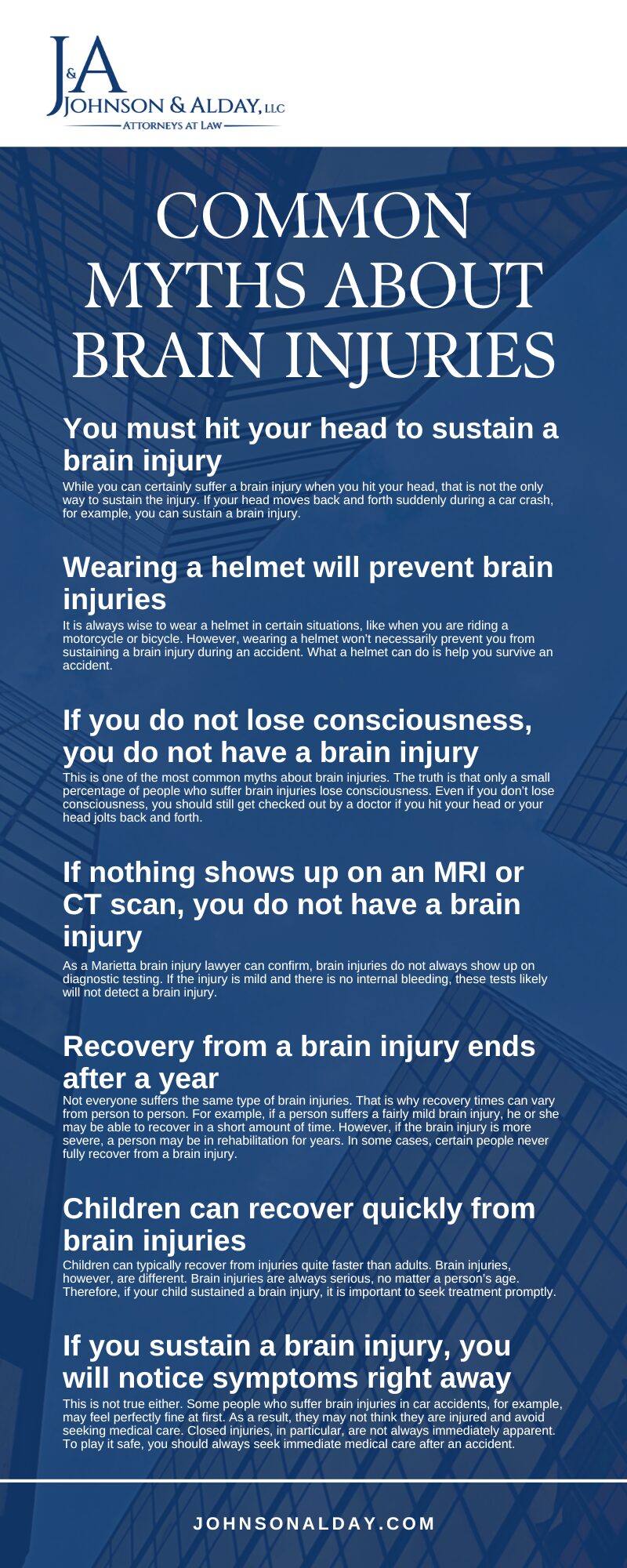
- You must hit your head to sustain a brain injury. While you can certainly suffer a brain injury when you hit your head, that is not the only way to sustain the injury. If your head moves back and forth suddenly during a car crash, for example, you can sustain a brain injury.
- Wearing a helmet will prevent brain injuries. It is always wise to wear a helmet in certain situations, like when you are riding a motorcycle or bicycle. However, wearing a helmet won’t necessarily prevent you from sustaining a brain injury during an accident. What a helmet can do is help you survive an accident.
- If you do not lose consciousness, you do not have a brain injury. This is one of the most common myths about brain injuries. The truth is that only a small percentage of people who suffer brain injuries lose consciousness. Even if you don’t lose consciousness, you should still get checked out by a doctor if you hit your head or your head jolts back and forth.
- If nothing shows up on an MRI or CT scan, you do not have a brain injury. As a Marietta brain injury lawyer can confirm, brain injuries do not always show up on diagnostic testing. If the injury is mild and there is no internal bleeding, these tests likely will not detect a brain injury.
- Recovery from a brain injury ends after a year. Not everyone suffers the same type of brain injuries. That is why recovery times can vary from person to person. For example, if a person suffers a fairly mild brain injury, he or she may be able to recover in a short amount of time. However, if the brain injury is more severe, a person may be in rehabilitation for years. In some cases, certain people never fully recover from a brain injury.
- Children can recover quickly from brain injuries. Children can typically recover from injuries quite faster than adults. Brain injuries, however, are different. Brain injuries are always serious, no matter a person’s age. Therefore, if your child sustained a brain injury, it is important to seek treatment promptly.
- If you sustain a brain injury, you will notice symptoms right away. This is not true either. Some people who suffer brain injuries in car accidents, for example, may feel perfectly fine at first. As a result, they may not think they are injured and avoid seeking medical care. Closed injuries, in particular, are not always immediately apparent. To play it safe, you should always seek immediate medical care after an accident.
Brain Injury Infographic
Overcoming Challenges In Brain Injury Litigation
Dealing with a brain injury is undoubtedly challenging, not just for the injured but also for their loved ones, and as an experienced Marietta, GA brain injury lawyer, we’re here to guide you through overcoming these challenges. At Johnson & Alday, LLC, we have seen how daunting the legal process can be for brain injury victims. Here’s what you should know about tackling the complexities of brain injury litigation:
Understanding The Complexity Of Brain Injuries
Brain injuries can range from mild to severe, and their symptoms can be subtle or significant. Understanding the full extent of the injury and its long-term effects is crucial. A Marietta brain injury lawyer will work with medical experts to thoroughly understand and document the nature of the brain injury and its impact on your life.
Establishing The Full Impact Of The Injury
Brain injuries can affect every aspect of a person’s life, from physical and cognitive abilities to emotional well-being. Demonstrating the full impact of the injury is essential in securing fair compensation. We focus on gathering comprehensive evidence, including medical records, expert testimony, and personal accounts, to build a strong case.
Navigating Medical Complexity
Brain injuries often involve complex medical terminology and concepts. It’s important to work with lawyers who can clearly communicate these medical aspects to a court or insurance company. As your Marietta brain injury lawyer, we ensure that the medical aspects of your case are accurately and effectively presented.
Addressing Long-Term Needs
Brain injuries can have lasting effects, necessitating ongoing medical care, rehabilitation, and support. It’s vital to consider future needs when seeking compensation. We work to secure a settlement or verdict that covers both current and future medical expenses, lost wages, and other related costs.
Challenges In Proving Liability
Proving liability in brain injury cases can be complex. We meticulously investigate the accident to establish fault and gather evidence to support your claim. This may include witness statements, accident reports, and, if necessary, reconstructing the accident scene.
Dealing With Insurance Companies
Insurance companies often aim to minimize payouts, especially in cases involving significant injuries like brain damage. Skilled negotiation is key. As a Marietta brain injury lawyer, we have extensive experience negotiating with insurers to ensure that you receive the compensation you deserve.
Understanding Legal Timelines And Procedures
Timely filing of a lawsuit and adherence to legal procedures are crucial in brain injury cases. Missing deadlines or overlooking procedural requirements can jeopardize your case. We keep track of all critical timelines and procedural steps, ensuring your case progresses smoothly.
Coping With Emotional And Psychological Effects
Beyond the physical impact, brain injuries can lead to significant emotional and psychological distress for both the victim and their family. Recognizing and addressing these effects is an important part of the litigation process.
Brain injury litigation can be a tough road, but you don’t have to walk it alone. At Johnson & Alday, LLC, we combine compassionate client care with aggressive legal representation. As your Marietta brain injury lawyer, we’re committed to fighting for your rights and securing the compensation you need to move forward. If you or a loved one is facing the aftermath of a brain injury, reach out to us. Let’s work together to overcome these challenges and achieve the justice you deserve.
Marietta Brain Injury FAQs
A brain injury can change your life, but your Marietta, GA brain injury lawyer can help you pick up the pieces. At Johnson & Alday, LLC, we have over 40 years of combined experience helping our clients get the compensation they deserve. Read on to learn more about what you can expect from your case.
What Legal Options Are Available For Someone Who Has Suffered A Brain Injury?
Victims of brain injuries have several legal avenues to consider, depending on how the injury occurred. These include:
- Personal Injury Lawsuit: If the injury was caused by someone else’s negligence, such as in car accidents or falls, the victim might file a personal injury lawsuit seeking damages for medical expenses, lost wages, pain and suffering, and ongoing care needs.
- Workers’ Compensation: If the injury occurred while at work, the victim could file for workers’ compensation benefits, which can provide medical benefits and a portion of their salary.
- Product Liability Claims: If the injury was caused by a defective product, such as faulty sports equipment or a car malfunction, a product liability claim might be appropriate.
- Medical Malpractice: In cases where a brain injury was the result of medical error, a medical malpractice claim can be filed.
Engaging with your Marietta brain injury lawyer early on can help to accurately determine the most appropriate course of action based on the specifics of the injury and its circumstances.
How Can Legal Representation Impact The Outcome Of A Brain Injury Case?
Your attorney can ensure that all potential sources of compensation are explored and that claims are filed timely and effectively. They bring expertise in valuing the full extent of the claim, not just immediate medical costs but also long-term needs such as ongoing therapy, modifications to living arrangements, and loss of future earnings.
What Evidence Is Most Important For Supporting A Brain Injury Claim?
The most critical evidence in a brain injury case includes:
- Medical Records: Documenting the diagnosis, treatment, and prognosis of the brain injury.
- Testimony: Neurologists and other medical professionals can provide statements on the expected impact of the injury on the victim’s life.
- Witness Testimony: Accounts from people who were present at the time of the injury or who can testify to the victim’s condition before and after the injury.
- Photos and Videos: Visual evidence of the scene where the injury occurred and the injuries themselves.
Your legal team will work to compile these elements to build a compelling case for your claim.
How Can An Attorney Help With The Long-Term Needs Of A Brain Injury Victim?
Legal representation involves advocacy for entitlement to governmental aid. They can also help you understand the structuring of settlements to ensure financial security through trusts, annuities, and more. This can provide lifelong financial support without jeopardizing your other benefits.
How Do Brain Injury Claims Differ From Other Personal Injury Claims?
Brain injury cases often require extensive medical evidence and professional testimony to fully demonstrate the scope of the injury’s impact on the victim’s life. The calculation of damages is also more complicated due to the potential for ongoing cognitive, emotional, and physical impairments.
Connect With Johnson & Alday, Llc For Brain Injury Claims
Johnson & Alday, LLC is here to support you through this challenging time. Get in touch with us today, and see how a Marietta brain injury lawyer from our office can help.
How Our Firm Can Help
Our attorneys are here to help if you or someone you know have received a brain injury. We will take the time to learn more about the situation and how it occurred. If it happened due to someone else’s negligent actions or lack of care then there may be a strong case against the guilty party. Compensation for the brain injury could be awarded along with a series of other items like time spent in a hospital, visits to a doctor, therapy sessions, damage to property in an accident, and more. These cases can be difficult to prove at times and may involve different levels of detail as to the series of events leading to injury. However, with our experience and skill, we believe that our lawyers can help prove how the accident occurred and how to go about giving a solid chance of compensation to our clients. Reach out to us today to speak with a brain injury lawyer Marietta, GA trusts.
Brain Injury Lawyer Marietta, GA
If you or someone you know have recently suffered a brain injury then getting in contact with a brain injury lawyer Marietta, GA resident’s trust from Johnson & Alday, LLC can make a major difference in whether or not you receive compensation for your injury. Brain injuries can come from many different circumstances and range anywhere from minor to severe in nature. A brain injury may see someone have difficulty thinking logically, speaking, or doing typical tasks. The injury also may become worse over a period of time with effects coming later on down the road.
What We Do For You
We will fight for you to ensure that you have a strong chance of being compensated for this unfortunate injury. Nobody should have to suffer through these injuries and be held responsible for paying back all of the different things related to this injury when it was not their fault for being injured in the first place. We will work with you to understand your circumstance and diligently work with insurance companies and other lawyers if they are involved in the case. Contact us today to learn more about how we can help your case and to speak to a Marietta, GA brain injury lawyer from Johnson & Alday, LLC.